
If your timber retaining wall is leaning, rotting, or falling apart, it is natural to wonder whether concrete sleepers are a better long-term option. In most cases, the answer is yes. Concrete sleeper retaining walls offer greater strength, lower maintenance, and better performance in Melbourne conditions than timber walls.
Jamesco specialises in replacing timber retaining walls with concrete sleeper systems across Melbourne. Whether your wall has reached the end of its lifespan or you are planning an upgrade, this guide explains what is involved, what you gain, and when replacement makes sense.

Why Timber Retaining Walls Fail in Melbourne
Timber retaining walls often deteriorate over time due to Melbourne’s climate and soil conditions. Wet winters, hot summers, and reactive clay soils place constant stress on timber structures.
Common causes of failure include:
- Rotting posts at ground level
- Splitting or warping sleepers
- Termite damage
- Poor drainage behind the wall
- Soil pressure pushing the wall outward
Even treated pine and hardwood eventually break down. Once deterioration begins, repairs are usually temporary. At that point, replacing the wall with a concrete sleeper system is often the most cost-effective solution.
Benefits of Concrete Sleeper Retaining Walls
Stronger and More Durable
Concrete sleepers are steel-reinforced and engineered to withstand soil pressure without cracking, warping, or shifting. They do not rot, attract termites, or degrade in wet conditions.
Low Maintenance
Once installed, concrete sleeper retaining walls require minimal upkeep. There is no need for staining, sealing, or replacing damaged sections, unlike timber walls.
Better Suited to Melbourne Conditions
Concrete sleepers handle reactive clay soils, heavy rainfall, and temperature changes without structural deterioration. They are designed to work with proper drainage systems, making them ideal for sloping blocks and moisture-prone sites.
Range of Design Options
Concrete sleepers are available in multiple finishes, including smooth concrete, timber-look textures, and sandstone-style finishes. This allows homeowners to achieve a modern or natural aesthetic without sacrificing durability.
When Should You Replace a Timber Retaining Wall?
Not every timber wall needs immediate replacement, but certain signs indicate structural failure or imminent risk:
- Rotting posts at ground level
- Splitting or warping sleepers
- Termite damage
- Poor drainage behind the wall
- Soil pressure pushing the wall outward
If any of these issues are present, replacement is often safer and more economical than ongoing repairs.
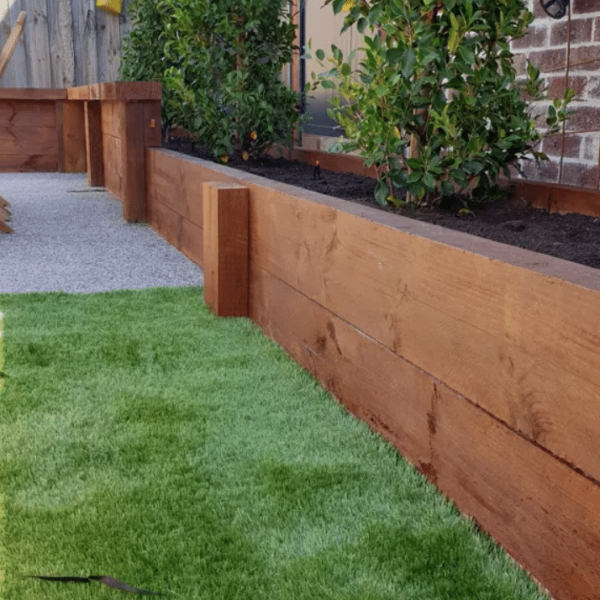
What’s Involved in Replacing Timber With Concrete Sleepers
1
Site Assessment and Design
Jamesco begins by assessing the existing wall, soil conditions, drainage, and wall height. For walls over 1 metre, engineering design is arranged to meet council and building requirements.
2
Removal of the Existing Timber Wall
The old timber wall, posts, and footings are removed. The ground behind the wall is inspected for erosion, instability, and drainage issues.
3
Base Preparation and Drainage Installation
A solid base is prepared through excavation and compaction. Drainage systems are installed to prevent water pressure building up behind the wall, which is critical for long-term performance.
4
Installation of Concrete Sleepers
Steel posts are installed, and concrete sleepers are stacked and secured according to engineering specifications. The wall is constructed to ensure structural stability and compliance.
5
Backfilling and Finishing
Drainage material is placed behind the wall, soil is compacted, and the site is finished. The result is a durable retaining wall designed to perform for decades.
Concrete Sleepers vs Other Retaining Wall Options
Concrete Sleepers vs Timber
Concrete sleepers significantly outlast timber and require far less maintenance. While timber can provide a natural appearance, it typically requires ongoing repairs and eventual replacement.
Concrete Sleepers vs Rock or Sandstone
Rock and sandstone walls are visually appealing and durable but generally cost more and take longer to construct. Concrete sleepers offer comparable durability at a more accessible price point.
Concrete Sleepers vs Gabion Walls
Gabion walls provide excellent drainage but can shift over time and may not suit all residential designs. Concrete sleepers offer a cleaner appearance and greater structural consistency.
Do You Need Council Approval to Replace a Retaining Wall?
In Melbourne, retaining walls over 1 metre in height usually require a building permit and engineering certification. Approval may also be required even if the new wall matches the height of the existing one, depending on council regulations.
Jamesco manages engineering coordination and council approvals as part of the replacement process, ensuring all requirements are met before construction begins.
How Long Do Concrete Sleeper Retaining Walls Last?
Concrete sleeper retaining walls are built for long-term performance. With proper design, drainage, and installation, they can last several decades without significant structural issues.
Unlike timber, concrete does not degrade due to moisture, pests, or weather exposure, making it a reliable long-term solution for Melbourne properties.
Why Replacing Timber With Concrete Sleepers Is a Smart Upgrade
Replacing a failing timber retaining wall with concrete sleepers is not just a repair – it is a structural upgrade that improves safety, durability, and property value.
Concrete sleeper retaining walls provide long-term stability, reduce maintenance costs, and perform reliably in Melbourne’s challenging soil and climate conditions.
Jamesco designs and builds concrete sleeper retaining walls across Melbourne, managing the entire process from assessment and engineering through to installation. The result is a retaining wall built to last and tailored to your property.