
Retaining walls do important work across Melbourne properties, holding back soil, managing drainage, and creating usable outdoor space on sloping blocks. But like any structural element exposed to weather and ground movement, retaining walls can deteriorate over time.
Small issues often become much larger problems if left too long. Cracking, leaning, drainage problems, and material breakdown can all indicate that a retaining wall is beginning to fail.
Recognising these warning signs early can help prevent more serious structural damage and reduce the likelihood of expensive repairs later.

Cracks and Splitting in Retaining Walls
Cracks in retaining walls are fairly common, but not all cracks should be ignored.
Small surface cracks may simply result from minor settling or ageing materials. Larger cracks, widening gaps, or multiple cracks appearing across different sections of the wall can indicate movement, drainage pressure, or structural stress.
Timber retaining walls may also begin splitting as the material ages and absorbs moisture over time. Once timber starts deteriorating in multiple locations, the wall can gradually lose structural strength.
If cracks continue growing or appear alongside movement in the wall, further assessment is usually worthwhile.
Leaning or Bulging Retaining Walls
A retaining wall should remain relatively straight and stable over time.
If sections of the wall begin leaning forward or bulging outward, this often means pressure is building behind the structure. Poor drainage is one of the most common causes, particularly when water becomes trapped behind the wall and increases soil pressure.
In some cases, leaning develops gradually and may first appear as a slight tilt along the top of the wall. Bulging sections are usually a more advanced warning sign that the wall is under stress.
Once significant movement occurs, repairs often become more complex and expensive.
Drainage Problems Behind Retaining Walls
Drainage plays a major role in retaining wall performance.
Water trapped behind a retaining wall increases pressure on the structure and is one of the leading causes of retaining wall failure across Melbourne properties.
Some common warning signs include:
- Water pooling near the base of the wall
- Damp or saturated soil behind the structure
- Water staining on the wall surface
- Soil washing out through gaps or joints
- Overflow during heavy rain
Walls without proper drainage systems, gravel backfill, or adequate outlets are generally more vulnerable to movement and long-term deterioration.
Movement Around the Retaining Wall
Retaining wall problems often affect surrounding areas as well.
Shifting fence posts, cracking paving, sinking pathways, uneven garden beds, or soil movement nearby can all indicate that the wall or footing is no longer stable.
These signs are sometimes overlooked because the wall itself may not appear badly damaged initially. However, movement around the structure can suggest the ground beneath the wall is beginning to shift.
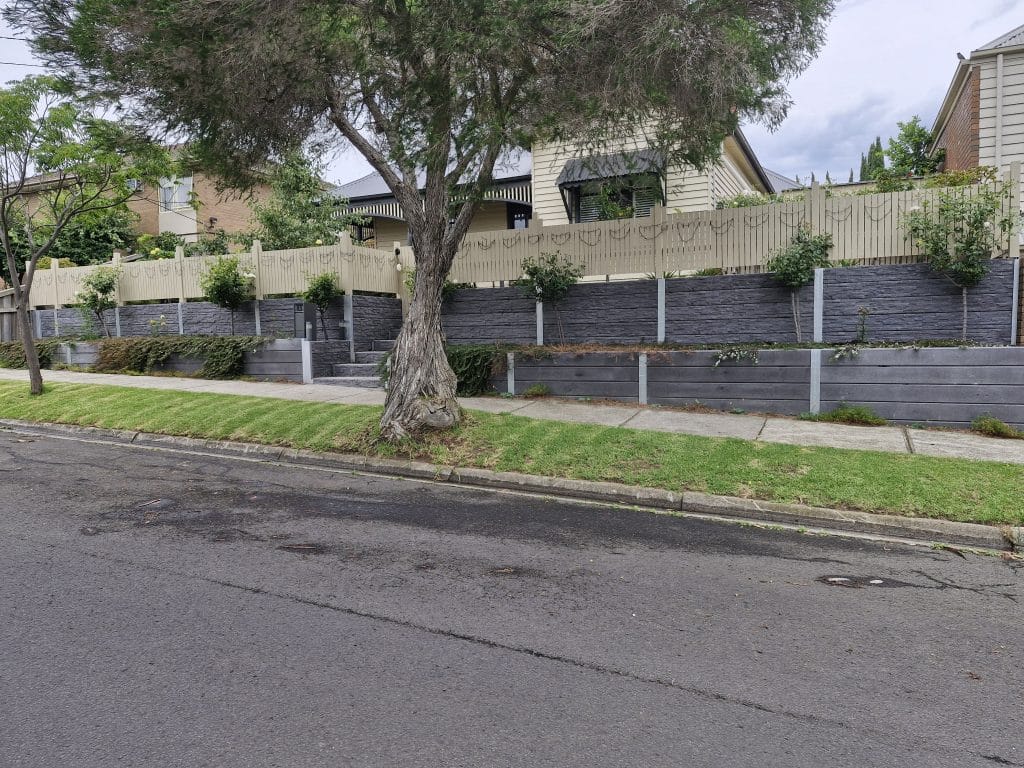
Rotting Timber and Deteriorating Retaining Wall Materials
Different retaining wall materials deteriorate in different ways over time.
Timber retaining walls are particularly vulnerable to rot and moisture damage, especially near ground level where water exposure is highest. Soft timber, fungal growth, or visible decay are usually signs the material is nearing the end of its lifespan.
Concrete walls may begin showing cracking, surface deterioration, or rust staining where internal reinforcement is affected. Stone and brick walls can also weaken as mortar joints deteriorate or individual sections begin shifting.
In some cases, isolated repairs may be possible. More widespread deterioration may indicate replacement is the safer long-term option.
Retaining Wall Footing Problems and Soil Movement
The footing supports the entire retaining wall structure.
If the footing begins shifting, eroding, or settling unevenly, the wall may start leaning, cracking, or sinking in certain areas. Poor drainage, reactive clay soils, erosion, and inadequate construction can all contribute to footing movement.
Signs of footing issues may include exposed foundations, gaps beneath the wall, uneven settling, or visible movement across different sections of the structure.
Once footing problems develop, more substantial repair work is often required.
Older Retaining Walls and Age-Related Problems
Even well-built retaining walls have a lifespan.
Older timber walls may only last a couple of decades depending on drainage conditions and the materials originally used. Some older retaining walls were also built before current engineering and drainage standards became more common.
As walls age, small defects often become more noticeable, particularly after periods of heavy rain or ongoing soil movement.
If an older retaining wall is already showing signs of cracking, leaning, or deterioration, replacement may ultimately provide a more reliable long-term outcome than ongoing patch repairs.
When to Have a Retaining Wall Professionally Assessed
Some retaining wall problems can be repaired if they are identified early. Minor drainage improvements, isolated repairs, or replacing damaged sections may help extend the life of the structure.
However, walls showing significant movement, major cracking, footing failure, or widespread material deterioration usually require professional assessment.
A failing retaining wall can become both a structural and safety issue, particularly on sloping sites or near neighbouring properties.
Jamesco Group provides retaining wall construction and replacement services across Melbourne, helping homeowners assess ageing or damaged retaining walls and determine the most appropriate long-term solution.