
Melbourne’s narrow blocks are becoming more common as urban density increases. When you are working with limited space, every metre counts. If your property includes a slope, uneven ground, or areas prone to erosion, you need a retaining wall that fits the site without taking up unnecessary room.
Tight access, close boundaries, and restricted working space all influence how retaining walls are designed and built. The right approach allows you to stabilise your site while preserving as much usable space as possible.
Jamesco designs and builds retaining walls across Melbourne that are tailored to narrow urban blocks, ensuring structural performance without compromising functionality.
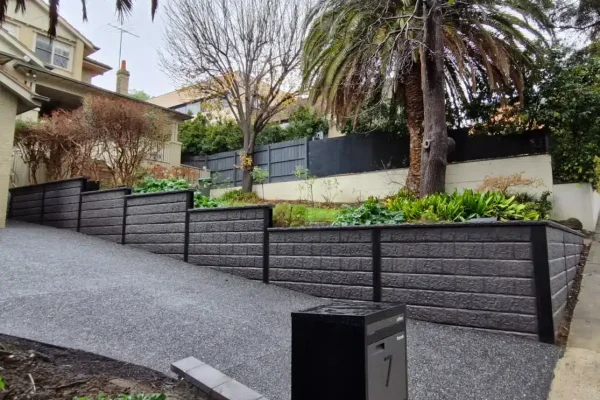
Why Narrow Blocks Require a Different Approach
Retaining walls on narrow blocks need to balance strength with space efficiency. Oversized designs or poor planning can reduce already limited outdoor areas and make the space harder to use.
Access is often restricted, which affects construction methods and material selection. In many Melbourne suburbs, side access is minimal or non-existent, requiring careful planning around delivery, excavation, and installation.
A well-designed retaining wall should support the land while allowing the rest of the property to remain practical and usable.
Best Retaining Wall Types for Narrow Melbourne Blocks
Some retaining wall systems work better than others when space is limited. The goal is to achieve structural strength without unnecessary bulk. Concrete sleeper retaining walls are one of the most effective solutions for narrow sites. They offer a slim profile while handling significant soil pressure, making them ideal for boundary installations and tight spaces. Key advantages include:
- Slim construction that preserves usable space
- High strength for medium to large walls
- Low maintenance once installed
- Consistent finishes to suit modern homes
Timber retaining walls are often used where access is extremely limited or where a lighter structure is suitable. They can be installed in stages and are easier to handle in confined areas.
Rock and gabion retaining walls are better suited to sites where drainage is a priority. While they take up more space, they can work well on narrow blocks with slopes where water management is critical.
The right choice depends on your site, wall height, and how much space you can allocate to the structure.
Managing Site Access on Tight Urban Blocks
Access is one of the biggest challenges when building retaining walls on narrow Melbourne properties. Limited side access and close neighbouring structures can restrict the use of machinery.
This affects how materials are delivered and how the wall is constructed. In many cases, smaller equipment or manual handling is required, which needs to be factored into planning.
An experienced builder will assess access early and design the wall accordingly, ensuring the project can be completed efficiently without unnecessary delays.
Designing Retaining Walls to Maximise Space
On a narrow block, design decisions directly impact how much usable space you retain. Wall thickness, footing design, and layout all influence the final outcome.
Concrete sleeper walls are often preferred because they sit close to boundaries and require less excavation than bulkier systems. This allows more space for landscaping, paving, or outdoor living areas.
Tiered retaining walls can also be effective on sloped narrow sites. Instead of one large wall, multiple levels create usable terraces and reduce pressure on each section. This approach is common in Melbourne suburbs with steeper blocks.
Drainage Is Critical on Narrow Blocks
Drainage becomes more important as space becomes more limited. Without proper water management, pressure builds behind the wall and can lead to movement or failure. Effective retaining wall drainage typically includes:
- Agricultural drains behind the wall
- Gravel backfill to allow water flow
- Weep holes to relieve pressure
On narrow sites, these systems need to be designed carefully so they remain effective without taking up additional space. Melbourne’s seasonal conditions, particularly winter rainfall, make proper drainage essential for long-term performance.
Council and Engineering Requirements
Retaining walls in Melbourne often require engineering and council approval, particularly when they are over one metre high or built near boundaries.
On narrow blocks, boundary placement and setbacks become more important. Walls may need to be positioned carefully to comply with regulations while still achieving the desired outcome.
Engineering ensures the wall is designed for the site conditions, including soil type, load, and drainage. Working with a builder who understands these requirements helps avoid delays and ensures compliance from the start.
Getting the Right Outcome for Your Block
Retaining walls on narrow Melbourne blocks require a considered approach. The right design should stabilise the land, manage drainage, and maximise usable space without overbuilding.
Jamesco specialises in retaining walls for tight urban sites across Melbourne. We assess your property, recommend the most suitable solution, and handle everything from design and approvals through to construction.