
Melbourne’s reactive clay soils create real challenges when building retaining walls. These soils expand when wet and shrink during dry periods, placing constant pressure on any structure holding them back.
If you are planning retaining walls in Melbourne, choosing the right material and construction method is critical. The wrong approach can lead to cracking, leaning, or early failure. The right approach gives you a wall that performs reliably for decades.
Understanding Melbourne’s Reactive Clay Soils
Reactive clay soils respond significantly to moisture changes. During wet months, they swell and increase pressure behind retaining walls. In dry conditions, they shrink and shift, which can cause movement and gaps.
This ongoing cycle puts stress on walls that are not designed for it. Poor drainage or shallow footings will almost always lead to problems over time.
These conditions are especially common across Melbourne’s western and northern suburbs, but they can occur throughout the city. Any sloped block or site requiring retained soil needs to account for this movement.
Concrete Sleeper Walls for Reliable Performance
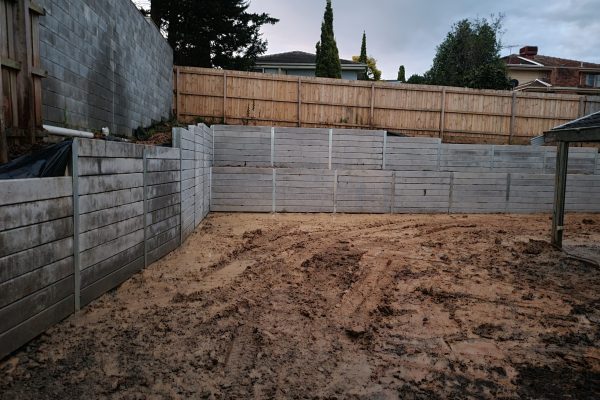
Concrete sleeper retaining walls are one of the most effective solutions for Melbourne’s reactive soils. Steel reinforcement allows them to handle ongoing ground movement without warping or deteriorating.
Unlike timber, concrete sleepers are not affected by moisture or pests. They maintain their structural integrity even when soil conditions change throughout the year. Key reasons they perform well include:
- Steel reinforcement to handle soil pressure
- Resistance to moisture and ground contact
- Consistent performance through seasonal changes
- Compatibility with engineered drainage systems
For most residential retaining walls in Melbourne, concrete sleepers provide a strong balance between durability, cost, and long-term performance.
When Engineered Retaining Walls Are Required
Some sites require a higher level of structural design. This typically applies to:
- Walls over one metre high
- Steep or heavily loaded sites
- Highly reactive or unstable soils
Engineered retaining walls are designed specifically for your site conditions. A structural engineer assesses soil type, slope, and load requirements, then specifies footing depth, reinforcement, and drainage. This ensures the wall performs safely and meets council requirements. Without proper engineering, walls in reactive clay soils are far more likely to fail over time.
Why Timber Retaining Walls Are Less Suitable
Timber retaining walls can work for low-height applications, but they are not ideal for reactive clay soils.
Clay retains moisture, which accelerates timber deterioration. Over time, posts weaken at ground level and sleepers begin to fail. Seasonal movement also puts stress on connections, causing warping and structural issues.
While timber may suit small garden walls, it is generally not the best option for structural retaining walls in Melbourne conditions.

Drainage Is Critical for Long-Term Performance
No retaining wall performs well in reactive clay without proper drainage. Water buildup increases pressure behind the wall and is one of the most common causes of failure. A well-built retaining wall should include:
- Agricultural drainage pipe behind the wall
- Gravel backfill to allow water flow
- Weep holes or outlets for pressure relief
- Surface grading to direct water away
In clay soils, drainage is even more important because water does not naturally drain away. Managing this correctly protects the wall and extends its lifespan.
Rock and Gabion Walls for Drainage-Focused Sites
Rock retaining walls and gabion systems offer natural drainage advantages. Water can pass through gaps in the structure rather than building up pressure behind it.
Gabion walls, in particular, provide flexibility. They can move slightly with the ground without cracking, which can be beneficial on reactive sites. These systems are often suited to:
- Sloped blocks with ongoing movement
- Areas where drainage is a priority
- Landscaping-focused designs
However, they still require proper base preparation and, in many cases, engineering to perform effectively.

Choosing the Right Solution for Your Property
There is no single solution that works for every site. The best retaining wall depends on:
- Soil reactivity and moisture conditions
- Wall height and load requirements
- Available space and access
- Desired appearance and budget
Concrete sleeper retaining walls suit most residential projects. Engineered walls are essential for more complex sites. Rock and gabion systems can work well where drainage and flexibility are priorities.
The key is matching the design to the conditions, rather than forcing a standard solution onto a challenging site.
Building Retaining Walls That Last in Melbourne
Retaining walls in Melbourne need to be built for movement, not against it. Reactive clay soils will always shift, so the wall must be designed to handle that pressure over time.
Jamesco builds retaining walls across Melbourne that are suited to local soil conditions. We assess your site, recommend the right system, and ensure drainage and construction are handled properly from the start.